
INTRODUCTION TO BPU
Bank Payment Undertaking, often abbreviated as BPU, serves as an irrevocable commitment from a bank to pay a seller on behalf of a buyer. This instrument ensures payment occurs once specific conditions are met, such as document submission or goods delivery. In trade finance, BPU mitigates risks in international transactions, providing security for both parties. Businesses use BPU to facilitate smooth cross border deals, reducing uncertainties tied to buyer creditworthiness. At TRG Venture Capital International Investment G.P. Limited, we recognize BPU’s role in supporting investment strategies through reliable financial tools. This article explores what BPU entails, its benefits, the process involved, a real-world example, and a detailed case study.
Professionals in finance often turn to BPU when structuring deals, ensuring commitments remain firm. While evaluating options, companies find BPU streamlines operations. Transitioning from traditional methods, BPU offers efficiency in payment assurance.
Understanding Bank Payment Undertaking
A Bank Payment Undertaking represents a bank’s formal promise to transfer funds to a beneficiary under defined terms. The bank issues this undertaking at the buyer’s request, guaranteeing payment upon compliance with conditions. For instance, sellers submit invoices or shipping documents to trigger the release.
In practice, BPU functions within trade finance frameworks. It addresses common challenges like payment delays or defaults. Banks assess the buyer’s credit before issuing, sometimes requiring collateral. This evaluation process protects all involved parties.
Furthermore, BPU aligns with regulatory standards. Financial institutions adhere to guidelines that prevent misuse. As a result, BPU maintains integrity in global trade.
According to the Global Supply Chain Finance Forum, BPU leverages business to business networks for matched transactions, enabling financing opportunities.
Key Features of Bank Payment Undertaking:
BPU includes several core elements that define its utility.
- Irrevocable Commitment: Once issued, the bank cannot withdraw the promise, providing unbreakable assurance.
- Document Dependency: Payment hinges on verified documents, such as bills of lading or certificates of inspection.
- Risk Reduction: Sellers gain confidence, knowing payment follows fulfillment.
- Conditional Payment: Banks release funds only after confirming compliance.
- Trade Finance Integration: BPU fits seamlessly into international deals, supporting export and import activities.
These features make BPU adaptable. For example, in volatile markets, it stabilizes cash flows. Additionally, banks charge fees for issuance, covering risk assessment and processing.
Dangling modifiers aside, while structuring agreements, parties specify exact terms to avoid disputes.
The Bank Payment Undertaking Process
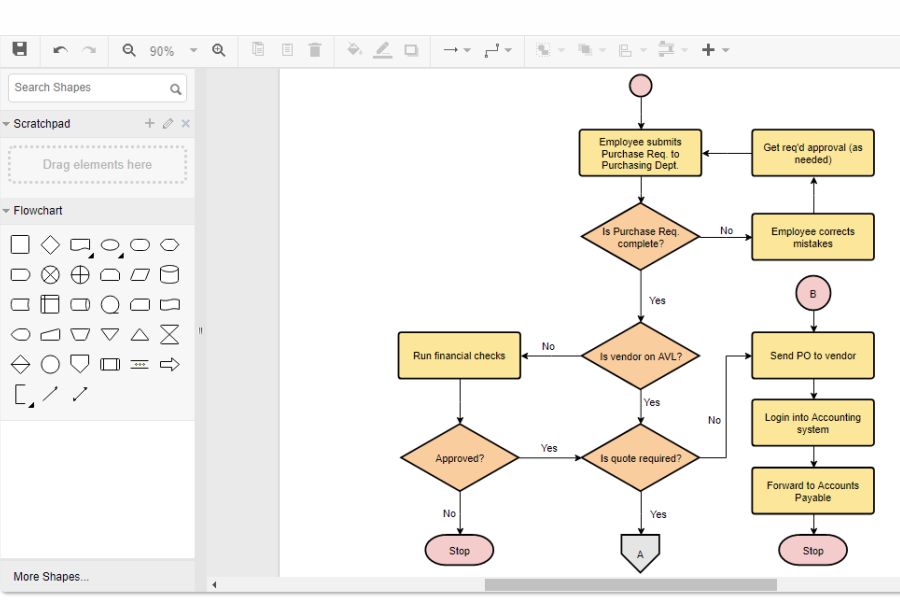
The process for obtaining and executing a BPU follows clear stages. First, the buyer and seller negotiate contract terms, including BPU requirements. They outline payment amounts, conditions, and timelines.
Next, the buyer approaches their bank to request issuance. The bank reviews the buyer’s financial standing and may demand security. Upon approval, the bank issues the BPU to the seller or their bank.
Then, the seller fulfills obligations, such as shipping goods. They prepare and submit required documents to the issuing bank.
Finally, the bank verifies submissions against BPU terms. If compliant, it processes payment promptly.
This sequence ensures transparency. However, delays can occur if documents lack accuracy. Therefore, parties prepare thoroughly.
Benefits of Using BPU in Trade
BPU delivers tangible advantages across stakeholders. It enhances transaction security, fostering long term business relationships.
Benefits for Sellers
Sellers receive guaranteed payment, minimizing exposure to buyer insolvency. This assurance allows focus on production without financial worries. Moreover, BPU enables access to financing, using the undertaking as collateral for loans.
In international trade, sellers negotiate better terms, knowing banks back payments. This reduces the need for upfront cash, improving liquidity.
Benefits for Buyers
Buyers defer payments until conditions are met, preserving capital. They build trust with sellers, leading to favorable deals. Additionally, BPU simplifies compliance with import regulations.
Buyers avoid immediate fund outflows, optimizing working capital. This flexibility supports growth in competitive markets.
Benefits for Banks
Banks earn fees from issuance and related services. They strengthen client relationships by offering risk managed solutions. Furthermore, BPU expands their trade finance portfolio.
To learn more about related concepts, visit Investopedia’s page on Letters of Credit, which compares similar instruments.
BPU vs. Letter of Credit: A Comparison
Professionals often compare BPU to Letters of Credit (LC). Both provide payment guarantees, yet differences exist.
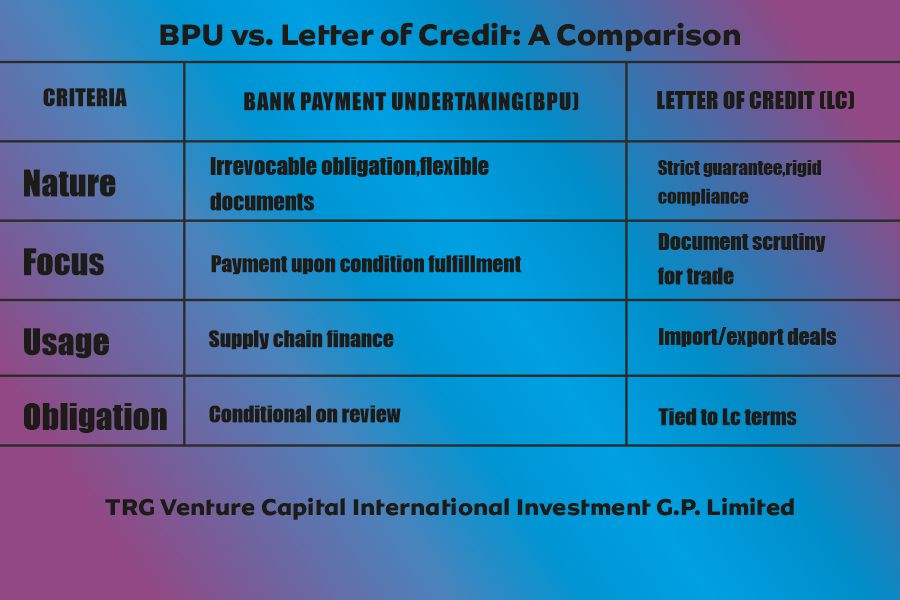
BPU offers more flexibility, suiting dynamic trades. In contrast, LC demands precise adherence, increasing complexity. Choosing between them depends on transaction needs.
For instance, BPU suits shorter cycles, while LC fits high-value exports. This comparison helps with decision making.
Example of BPU in Action
An exporter in Asia who supplies electronics to an European retailer worries about payment delays due to market fluctuations. To address this, the retailer arranges a BPU through their bank.
The bank issues the undertaking for €2 million, contingent on shipping documents. The exporter ships goods and submits papers. The bank verifies and pays within days.
This scenerio illustrates BPU’s role in bridging trust gaps. Without it, the deal might stall. Instead, both parties proceed confidently.
Case Study
GlobalTech Industries GmbH, a German manufacturer, secured a €50 million contract for machinery parts with a European buyer. Facing cash flow constraints, they sought payment assurance.
Challenges included upfront capital needs and buyer risk. Partnering with a finance provider, they structured a BPU.
Steps involved:
- Assessed contract and gathered documents like invoices.
- Coordinated BPU issuance from an international bank.
- Obtained pre-production loans using BPU as security.
- Delivered goods and submitted verifications for payment.
Outcomes showed reduced exposure, improved liquidity, and timely fulfillment.
(FAQ)
What does Bank Payment Undertaking mean in trade finance?
Bank Payment Undertaking refers to a bank’s irrevocable promise to pay a seller upon meeting conditions, enhancing security in transactions.
How does BPU differ from a standard bank guarantee?
BPU focuses on conditional payments in trade, while bank guarantees cover broader obligations like performance.
Can small businesses use BPU for international deals?
Yes, small businesses access BPU through banks, provided they meet credit requirements, aiding global expansion.
What documents are typically required for BPU activation?
Common documents include invoices, bills of lading, and inspection certificates, verified by the issuing bank.
Is BPU regulated under international standards?
BPU adheres to financial regulations, ensuring compliance and preventing fraud in global trade.
How long does the BPU process usually take?
The issuance takes days to weeks, depending on bank reviews, while payment occurs shortly after document verification.
Conclusion
Bank Payment Undertaking stands as a vital tool in trade finance, offering irrevocable payment commitments that reduce risks and streamline processes. From benefits like enhanced liquidity to structured steps ensuring compliance, BPU supports efficient international transactions. At TRG Venture Capital International Investment G.P. Limited, we leverage such instruments to drive investment success.
#BankPaymentUndertaking #BPU #TradeFinance
Contact TRG Venture Capital today, don’t miss out on transforming your trade risks into opportunities.
Email us at info@trgventure.capital
WEBSITE: www.trgventure.capital