
(BG vs SBLC) – Key Differences
International trade, infrastructure development, commodity transactions, and corporate financing often depend on trusted financial instruments that reduce counterparty risk. Understanding the difference between a Bank Guarantee (BG) vs Standby Letter of Credit (SBLC) is essential for businesses involved in global trade, project funding, and structured finance. Although both instruments provide financial security and payment assurance, they serve different purposes, operate under different banking frameworks, and carry unique advantages for international transactions. Among the most widely used instruments in modern trade finance are the Bank Guarantee (BG) and the Standby Letter of Credit (SBLC).
AtTRG Venture Capital International Investment G.P. Limited, we regularly assist clients worldwide with BG and SBLC advisory, monetization, trade finance structuring, and funding support. As global markets become increasingly compliance driven in 2026, choosing the correct instrument can significantly impact liquidity, transaction security, and financing success.
Whether you’re bidding on a major infrastructure project in Africa, securing supply chains in Europe, or expanding trade routes in Asia, understanding BG vs SBLC can mean the difference between seamless execution and costly disputes.
This detailed guide explains the key differences between BG and SBLC, their practical applications, benefits, risks, monetization potential, and how businesses can strategically use them for growth and international transactions.
What Is a Bank Guarantee (BG)?
A Bank Guarantee (BG) is a bank’s irrevocable undertaking to pay a beneficiary a specified amount if the bank’s client (the applicant) fails to fulfill contractual obligations. It acts as a secondary obligation, stepping in only upon default.
Banks issue BGs under local or national laws, offering flexibility suited to domestic or regional transactions. In construction, procurement, or performance contracts, they assure the beneficiary that financial compensation follows non-performance.
In simple terms, the bank acts as a financial backstop.
Bank Guarantees are commonly used in:
• Construction projects
• Infrastructure contracts
• Equipment procurement
• International trade
• Tender participation
• Commodity transactions
• Lease agreements
• Corporate obligations
The issuing bank promises compensation if the applicant defaults.
According to Investopedia’s explanation of bank guarantees, bank guarantees help facilitate business relationships where trust, performance assurance, and financial security are critical.
Main Parties in a Bank Guarantee
A BG transaction generally involves:
- Applicant (buyer or contractor)
- Issuing bank
- Beneficiary (seller or project owner)
Common Types of Bank Guarantees
• Performance Guarantee: Ensures project or service completion as per contract terms.
• Advance Payment Guarantee: Protects repayment of upfront funds if the supplier defaults.
• Bid/Tender Guarantee: Secures serious intent in competitive bidding.
• Payment Guarantee: Guarantees seller payment on due dates.
• Rental or Warranty Guarantees: Covers lease obligations or product warranties.
These instruments prove especially valuable in markets where trust-building requires tangible financial backing.
Understanding Standby Letters of Credit (SBLC)
A Standby Letter of Credit (SBLC) is a bank-issued financial instrument guaranteeing payment to a beneficiary if the applicant fails to meet contractual or payment obligations.
An SBLC acts as a “backup payment mechanism.”
Unlike traditional documentary letters of credit used for routine trade settlements, SBLCs are only activated upon default or non-performance.
The framework governing most SBLCs is commonly based on:
- UCP 600
- ISP98 rules
- International banking compliance standards
You can learn more about standby letters of credit through Wikipedia’s overview of standby letters of credit.
Common Uses of SBLCs
SBLCs are frequently used for:
- International trade transactions
- Commodity trading
- Credit enhancement
- Project finance
- Import/export financing
- Structured finance
- Real estate development
- Corporate funding support
Main Types of SBLCs
- Financial SBLC: Guarantees monetary obligations, such as loan repayments or goods payments.
- Performance SBLC: Ensures completion of contractual duties, like project milestones.
SBLCs excel in cross-border scenarios due to their standardized, documentary nature.
Bank Guarantee vs Standby Letter of Credit (BG vs SBLC) – Core Differences Explained
While both instruments reduce risk and build confidence, their structures, governing rules, and applications differ significantly.
Legal Framework and Governance:
Bank Guarantees typically fall under local civil law, allowing more flexibility but potentially varying enforcement across jurisdictions. SBLCs adhere to uniform international standards (ISP98 for standbys, UCP 600), providing predictability in global trade.
Payment Trigger:
For BGs, a simple demand or proof of breach often suffices, depending on the terms (demand guarantees are common). SBLCs require strict documentary compliance the beneficiary must present specific evidence of default. This makes SBLCs more conditional but less prone to frivolous claims.
Risk Allocation and Liability:
Banks assume secondary liability in most BGs. With SBLCs, the issuing bank often takes primary obligation upon compliant demand, offering stronger assurance to beneficiaries.
Documentation and Formalities:
SBLCs demand precise documentation, increasing processing rigor but enhancing security. BGs offer simpler procedures, suiting faster domestic needs.
Cost Considerations:
SBLCs often carry higher fees (1-10% annually) due to complexity and international compliance. BGs may prove more cost-effective for local transactions.
Transferability and Expiry:
SBLCs transfer more readily, beneficial for complex supply chains. Both have expiry dates, but SBLC terms integrate seamlessly into international contracts.
Geographic Preference:
BGS dominate many domestic markets and regions outside the US. In the United States, banks commonly issue SBLCs instead of traditional BGs.
Bank Guarantee vs Standby Letter of Credit (BG vs SBLC): Quick Comparison Table
| Feature | Bank Guarantee (BG) | Standby Letter of Credit (SBLC) |
|---|---|---|
| Main Purpose | Performance assurance | Payment assurance |
| Usage | Contracts & projects | Trade & finance |
| Trigger | Non-performance | Non-payment |
| Popular Regions | Europe, Asia | US & global finance |
| Monetization | Moderate | High |
| Governing Rules | URDG 758 | ISP98 / UCP 600 |
| Common Industries | Construction, procurement | Trade finance, commodities |
| Risk Coverage | Contractual risk | Payment risk |
Do well to read our new article on Standby Letter of Credit (SBLC / SLOC) 2026
Why Businesses Use BGs and SBLCs in 2026
Global trade has become increasingly complex due to:
• Compliance requirements
• Cross-border transaction risk
• Supply chain disruptions
• Political uncertainty
• Liquidity challenges
As a result, financial institutions and corporate counterparties now require stronger forms of security before approving large transactions.
BGs and SBLCs help businesses:
• Build credibility
• Reduce counterparty risk
• Secure contracts
• Unlock financing
• Improve cash flow flexibility
• Enhance transaction confidence
Practical Insights: Choosing the Right Instrument
Your choice depends on transaction nature, geography, counterparty familiarity, and risk tolerance.
When to Choose a Bank Guarantee Opt for BG in domestic or regional projects with established legal frameworks. Construction firms bidding on government tenders frequently use them. They offer flexibility and often lower costs where documentary rigor is unnecessary.
When to Choose an SBLC Select SBLC for international transactions, especially with unfamiliar parties or differing legal systems. They provide robust protection in trade finance, energy deals, or large-scale investments. Their documentary nature minimizes disputes.
Hybrid Approaches Sophisticated deals sometimes combine both or layer them with insurance and collateral for optimal risk mitigation.
At TRG Venture Capital, we assess each client’s unique position cash flow, credit profile, project scale to recommend the most efficient structure.
How BG and SBLC Monetization Works
One of the most important modern uses of these instruments is monetization.
What Is Monetization?
Monetization refers to converting a financial instrument into:
• Immediate liquidity
• Credit facilities
• Investment capital
• Structured funding
The holder pledges the BG or SBLC to a monetizer or funding institution in exchange for financing.
At TRG Venture Capital International Investment G.P. Limited, clients often seek monetization for:
• Business expansion
• Real estate development
• Energy projects
• Commodity trading
• Infrastructure financing
• Working capital support
Bank Guarantee vs Standby Letter of Credit (BG vs SBLC): Step by Step Monetization Process
- Instrument Review
The monetizer evaluates:
• Issuing bank
• SWIFT format
• Compliance standards
• Authenticity
• Value and tenor - Due Diligence & KYC
AML and compliance checks are conducted. - Verification
The instrument is verified bank-to-bank through SWIFT communication. - Monetization Agreement
Terms are negotiated, including:
• LTV ratio
• Funding structure
• Duration
• Exit strategy - Funding Release
The monetizer provides liquidity or credit facilities.
Bank Guarantee vs Standby Letter of Credit (BG vs SBLC): Real-World Example
A commodity trading company in Asia secures a $20 million SBLC from a top-tier bank to support petroleum imports.
Instead of using cash collateral for every shipment, the SBLC reassures suppliers that payment obligations are protected. The company then monetizes the SBLC to obtain additional working capital for logistics and inventory expansion.
This structure allows the business to:
• Increase trade volume
• Preserve liquidity
• Improve supplier confidence
• Scale operations faster
Mini Case Study: Infrastructure Contractor Using a BG
A regional construction contractor bidding for a government infrastructure project needed a performance guarantee to secure the contract.
The project owner required assurance that contractual obligations would be fulfilled.
The contractor obtained a performance Bank Guarantee from a reputable financial institution. Once awarded the contract, the BG improved the contractor’s credibility and enabled access to additional supplier financing.
Result:
• Contract successfully secured
• Supplier confidence improved
• Financing approvals accelerated
• Project cash flow stabilized
This demonstrates how BGs can directly support operational growth and project execution.
Bank Guarantee vs Standby Letter of Credit (BG vs SBLC): Benefits and Risks of Each Instrument
Benefits of Bank Guarantees:
• Greater flexibility
• Often lower costs
• Simpler claims process in familiar jurisdictions
• Strong for performance-oriented contracts
Benefits of SBLCs:
• High international acceptance
• Standardized rules reduce disputes
• Stronger beneficiary protection
• Enhanced credibility in global markets
Common Risks and Mitigation:
• Wrong instrument choice leading to disputes or higher costs
• Documentary discrepancies in SBLCs (avoided through expert drafting)
• Fraud risks (mitigated by working with reputable institutions like TRG Venture Capital)
• Liquidity impact from collateral requirements
Always conduct thorough due diligence and engage experienced advisors.
How TRG Venture Capital Facilitates BG and SBLC Transactions
As a trusted partner based in Jersey with global reach, TRG Venture Capital International Investment G.P. Limited specializes in arranging these instruments efficiently.
TRG Venture Capital International Investment G.P. Limited provides strategic support for businesses seeking:
• BG advisory
• SBLC structuring
• Monetization solutions
• Trade finance support
• Project funding assistance
• Corporate finance consulting
Our approach emphasizes:
• Compliance
• Transparency
• Professional due diligence
• International banking standards
• Risk-managed funding structures
We work with businesses across sectors including:
• Energy
• Commodities
• Real estate
• Infrastructure
• Manufacturing
• Import/export
• Logistics
We prioritize speed, transparency, and competitive pricing while maintaining full regulatory compliance.
Bank Guarantee vs Standby Letter of Credit (BG vs SBLC): Regulatory and Compliance Considerations in 2026
Evolving regulations emphasize anti-money laundering (AML), know-your-customer (KYC), and sanctions compliance. International standards continue harmonizing, but local nuances persist.
TRG Venture Capital ensures all instruments meet current best practices, protecting clients from compliance pitfalls.
“In trade finance, the right guarantee isn’t just about security it’s about enabling growth while managing risk intelligently.” — Financial Expert at TRG Venture Capital International Investment G.P. Limited,
The Growing Role of Structured Trade Finance
Global trade finance continues evolving rapidly. According to the World Bank official website, access to financial infrastructure remains essential for global economic growth, cross-border commerce, and private sector development.
Modern businesses increasingly combine:
• SBLCs
• BGs
• Trade finance facilities
• Structured credit solutions
• Supply chain financing
• Asset-backed lending
This integrated approach helps companies remain competitive in volatile global markets.
Bank Guarantee vs Standby Letter of Credit (BG vs SBLC) – Frequently Asked Questions (FAQ)
What is the main difference between a BG and an SBLC?
A Bank Guarantee mainly protects against contractual non-performance, while an SBLC primarily protects against payment default.
Can a BG be monetized?
Yes. Certain Bank Guarantees can be monetized depending on:
• Issuing bank quality
• Instrument wording
• Transaction structure
• Beneficiary profile
Is an SBLC safer than a Bank Guarantee?
Both instruments can be secure when issued by reputable banks. However, SBLCs are often preferred in international trade finance because of their flexibility and broad acceptance.
Which industries commonly use BGs?
BGs are heavily used in:
• Construction
• Infrastructure
• Procurement
• Government contracts
• Industrial projects
What does SBLC monetization mean?
SBLC monetization refers to using the SBLC as collateral to obtain liquidity, funding, or credit facilities from financial institutions or monetizers.
Can small businesses use BGs or SBLCs?
Yes. Small and medium-sized enterprises may use these instruments for:
• Import/export transactions
• Supplier assurance
• Contract bidding
• Working capital support
How long does BG or SBLC issuance take?
Issuance timelines vary depending on:
• Bank procedures
• Compliance requirements
• Client documentation
• Transaction complexity
In many cases, properly structured transactions move significantly faster with experienced advisory support.
Are BGs and SBLCs regulated internationally?
Yes. These instruments typically operate under international banking rules such as:
• UCP 600
• ISP98
• URDG 758
They are also subject to local banking regulations and international compliance standards.
Bank Guarantee vs Standby Letter of Credit (BG vs SBLC): Making the Informed Choice with Confidence
Understanding the difference between a Bank Guarantee (BG) and a Standby Letter of Credit (SBLC) is critical for businesses operating in modern international markets.
While both instruments provide financial security, they serve different strategic purposes. A BG focuses more on contractual performance assurance, whereas an SBLC functions primarily as a payment protection and financing support instrument.
In 2026, companies increasingly rely on these instruments not only for risk mitigation but also for liquidity enhancement, trade finance structuring, and global business expansion.
Businesses that properly structure BG and SBLC transactions can:
- Improve transaction credibility
- Access larger opportunities
- Strengthen supplier relationships
- Unlock financing potential
- Reduce commercial risk
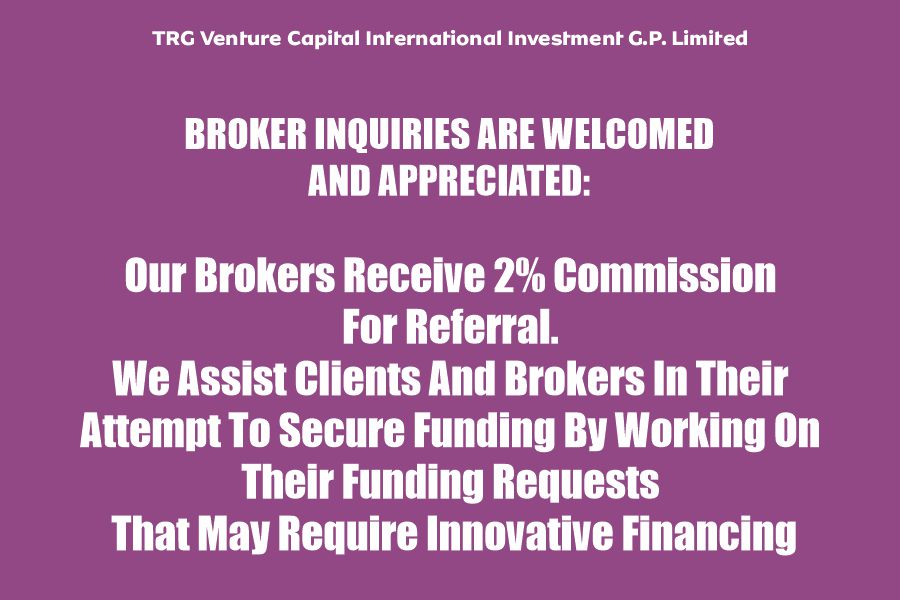
Our brokers receive 2% commission for successful referrals. TRG Venture Capital assists both clients and brokers in securing Bank Guarantee and Standby Letter of Credit (SBLC) funding solutions.
At TRG Venture Capital International Investment G.P. Limited, we don’t just issue instruments we craft tailored financial strategies that drive sustainable growth. Our team’s deep expertise ensures you select and implement the right solution efficiently.
Ready to secure your next major transaction or project? Contact our team today to discuss how BG, SBLC, or a customized combination can support your ambitions. Let’s build trust, mitigate risks, and unlock your full potential together.
Contact TRG Venture Capital International Investment G.P. Limited for expert guidance on Bank Guarantees, Standby Letters of Credit, and comprehensive trade finance solutions.
Visit our website www.trgventure.capital or email us info@trgventure.capital directly to begin the application process. Your capital opportunity awaits.