
Fund Projects Without Balance Sheet Strain
Project finance loans in 2026 deliver capital for infrastructure and industrial projects worth millions. TRG Venture Capital International Investment G.P. Limited structures these facilities so sponsors fund long-term assets through project cash flows rather than corporate balance sheets. Project finance loans support power plants, transport corridors, data centres, manufacturing facilities and renewable energy installations. Sponsors isolate risk inside a special purpose vehicle and lenders look first to project revenues for repayment. This approach remains central to funding infrastructure and industrial projects that exceed ordinary corporate borrowing capacity.
In 2026 the demand for such financing continues to rise. Global infrastructure needs run into trillions of dollars through the next two decades. TRG Venture Capital International Investment G.P. Limited, based at 26 New Street, St Helier, Jersey, JE2 3RA, provides a point of contact for businesses wishing to discuss their financial transaction and guarantee-related requirements.
What Project Finance Means in Practice
Project finance is the long-term funding of infrastructure and industrial projects based on the projected cash flows of the project rather than the balance sheets of its sponsors. A special purpose vehicle holds the project assets and contracts. Equity sponsors and a syndicate of lenders provide the capital. Loans are typically non-recourse or limited-recourse. Lenders secure their position against the project assets and the revenue contracts. If the project company faces difficulty, lenders may step in, yet the sponsors’ other assets stay protected.
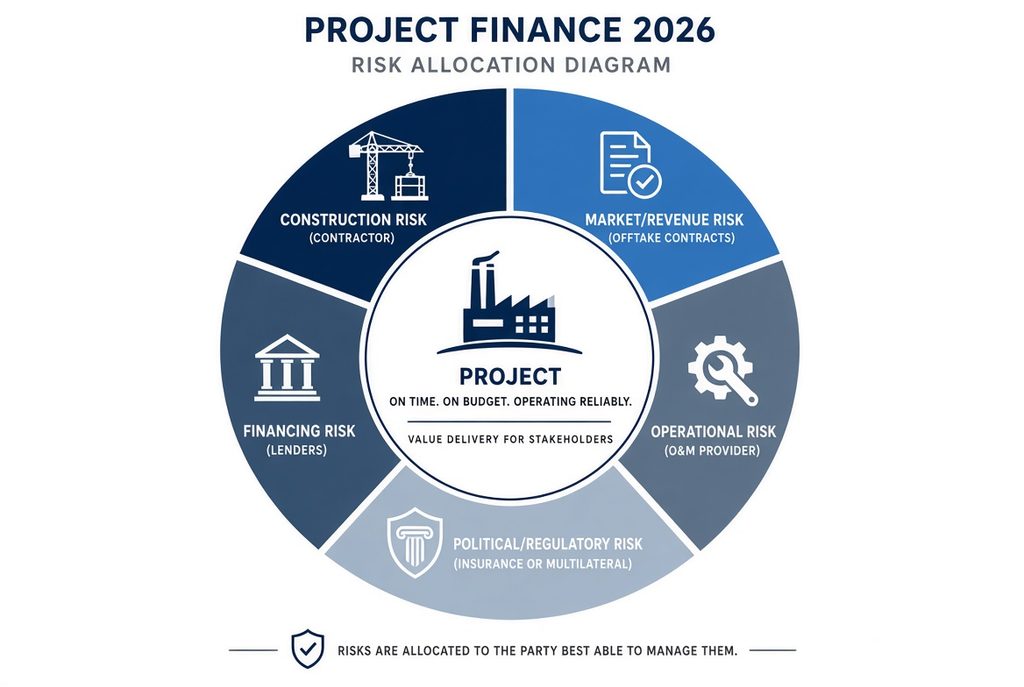
According to established definitions, this structure keeps debt off the parent company’s balance sheet and allocates risk among parties best able to manage each element. Construction risk sits with the contractor. Market risk may be mitigated through offtake agreements. Political and regulatory risk can be addressed through insurance or multilateral support. The result is a financing package sized to the project’s own economics.
Do well to read our article on Bank Guarantee Without Collateral | TRG Venture Capital
Why Project Finance Loans Matter for Infrastructure and Industrial Projects in 2026
Infrastructure and industrial projects require large upfront capital and generate returns over decades. Traditional corporate loans place the full obligation on the sponsor. Project finance loans change that calculation. The debt service coverage ratio becomes the key metric. Lenders examine whether the project generates enough cash after operating costs to cover principal and interest in each period. Debt is often sculpted so that repayment obligations match the expected cash-flow profile.
In 2026 several forces increase the relevance of this model. Data-centre construction and the associated power demand drive new generation and grid projects. Renewable energy portfolios continue to expand. Transport and logistics corridors need upgrading. Industrial facilities that support onshoring or critical supply chains also seek long-term capital. Multilateral development banks and commercial lenders both participate, often combining senior debt, mezzanine layers and equity.
Rising capital costs in recent years have forced sponsors to refine structures. Fixed-rate amortising debt, long-term offtake contracts and carefully allocated construction risk keep projects bankable. Project finance loans therefore remain a primary tool for assets whose value is realised over long periods under uncertainty.
Core Elements of a Project Finance Structure
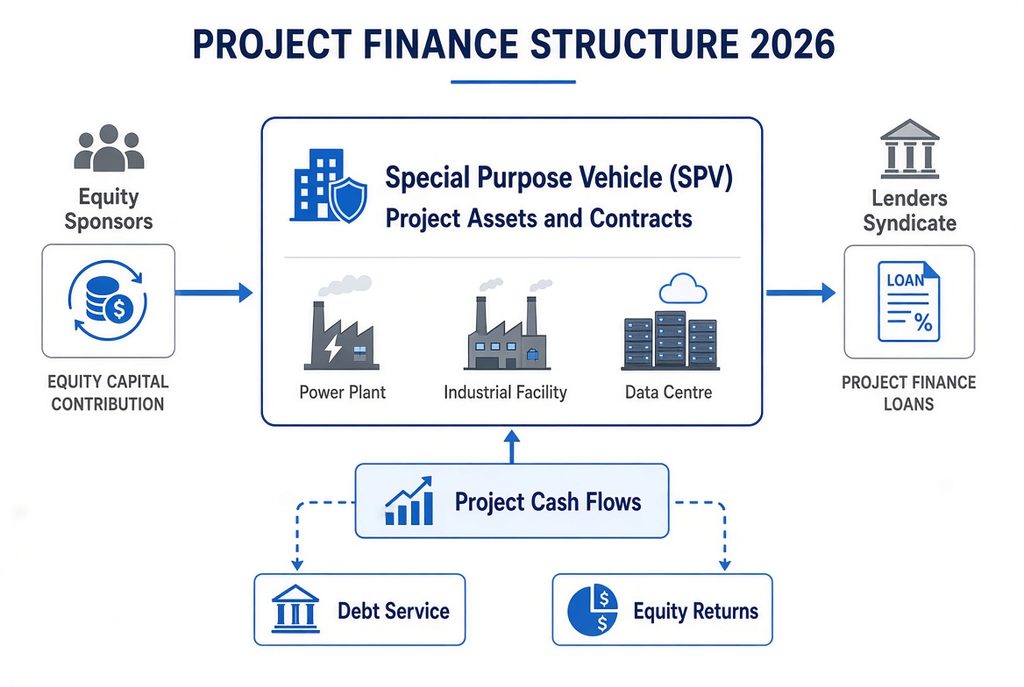
A typical transaction begins with the creation of the special purpose vehicle. Sponsors contribute equity. Lenders provide debt that is secured by the project’s assets, accounts and contracts. An independent engineer reviews construction plans and progress. An independent technical and market adviser validates the revenue assumptions. Legal counsel documents the web of contracts: engineering, procurement and construction agreements, offtake or power-purchase agreements, operation and maintenance contracts, and the financing documents themselves.
Risk allocation is deliberate. Construction cost overruns and delays are often fixed under a turnkey contract. Volume or price risk may be reduced through long-term contracts or hedges. Force-majeure and change-in-law provisions address external events. Insurance packages cover physical damage, business interruption and political risk where relevant.
Cash-flow waterfalls determine the order of payments. Operating costs and taxes come first. Debt service follows. Then reserve accounts are funded. Only after these steps do equity distributions occur. This discipline protects lenders and aligns incentives.
Trends Shaping Project Finance Loans in 2026
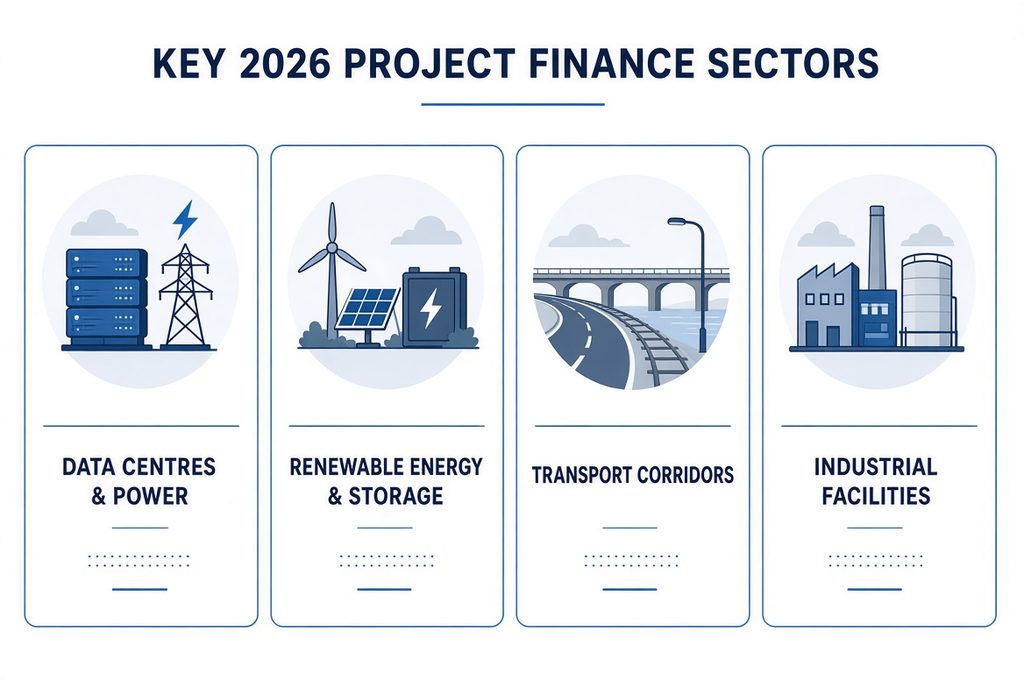
Transaction volumes remain robust across energy, digital infrastructure and transport. Larger deal sizes appear more frequently. Hybrid structures that blend project finance with infrastructure and real-estate techniques gain ground for data centres and related power assets. Sustainability-linked features appear in many facilities, tying margins or covenants to environmental performance targets.
Emerging markets continue to rely on project finance for power, water and transport. Developed markets apply the same techniques to grid reinforcement, nuclear new-build proposals and battery storage. Institutional investors, pension funds and infrastructure debt funds supply a growing share of the capital. Banks still lead many syndications, yet private credit platforms expand their presence.
Regulatory frameworks evolve. In several jurisdictions, updated project-finance directions clarify provisioning, resolution and external commercial borrowing rules. These changes aim to improve transparency and standardise lender behaviour. Sponsors that prepare thorough financial models and clear risk matrices navigate the process more efficiently.
Case Study: Industrial Facility Expansion Supported by Structured Capital
Years back an industrial group planned a new manufacturing facility with an estimated cost of several hundred million dollars. Though the project required specialised equipment, site preparation and long-term supply contracts. Corporate borrowing capacity was limited by existing leverage. The sponsor approached TRG Venture Capital International Investment G.P. Limited for a project finance solution.
TRG Venture Capital reviewed the business plan, cash-flow projections and offtake arrangements. A special purpose vehicle was established. Senior debt was arranged with a syndicate, supplemented by structured instruments that provided additional liquidity during construction. Risk allocation placed construction performance with the turnkey contractor and revenue certainty with the long-term customer contracts. Independent technical and market diligence confirmed the assumptions.
The facility closed with a debt package sized to the project’s cash-flow capacity. Construction progressed on schedule. Upon completion the project began generating the forecasted revenues. Debt service has been met without recourse to the parent company’s other assets. The sponsor retained capacity for additional growth initiatives. This outcome illustrates how project finance loans enable industrial expansion when traditional balance-sheet financing would constrain the overall group.
How TRG Venture Capital Supports Project Finance Loans
TRG Venture Capital International Investment G.P. Limited focuses on delivering capital for projects that require scale and structure. The firm works with sponsors seeking facilities from several million dollars upward. Solutions include senior debt, structured credit and complementary instruments such as bank guarantees that support related trade or performance obligations.
The process begins with a clear understanding of the project economics. TRG Venture Capital examines the cash-flow model, the contractual framework and the risk allocation. Where appropriate, the team introduces lenders or co-investors who specialise in infrastructure and industrial assets. Documentation is prepared to international standards. Execution timelines are managed so that sponsors can meet construction or acquisition deadlines.
Because the firm operates from Jersey and serves clients across multiple regions, it can coordinate cross-border elements that often arise in larger projects. Sponsors receive dedicated support through application, due diligence and closing. The emphasis remains on practical structures that match project cash flows rather than generic corporate products.
We Provide Loan, Sblc/Bank guarantee funding For Startups. Small Businesses (SMEs). Medium and Large Business. Public and Private Companies. Service Companies. Construction Companies. Agricultural Companies. Mining Companies. Real Estate. Energy Companies. Manufacturing Companies. Companies Looking to Go Public. Companies Across All Industries.
Steps to Secure Project Finance Loans in 2026
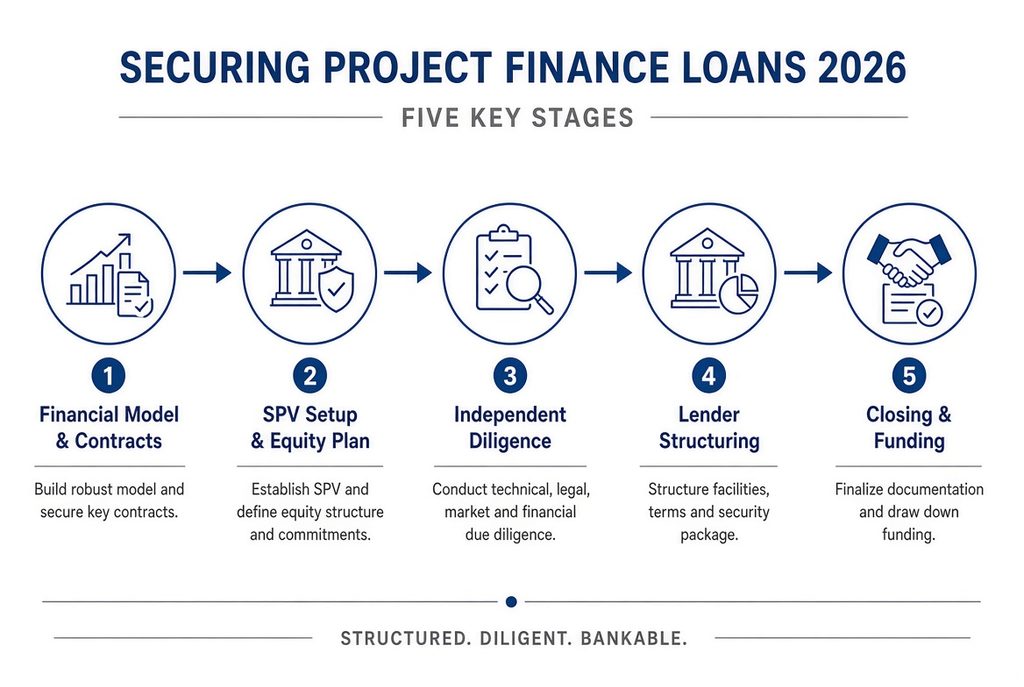
First, prepare a robust financial model that projects cash flows over the full debt tenor. Include base, downside and stress scenarios. Second, assemble the key contracts: offtake, construction, operation and land or resource rights. Third, identify the special purpose vehicle structure and the equity contribution plan. Fourth, engage independent advisers for technical, market and legal diligence. Fifth, approach lenders or arrangers with a complete information package.
TRG Venture Capital can guide sponsors through these steps. Early discussion of the risk matrix and the proposed debt-to-equity ratio improves the probability of a successful close. Clear communication of the project’s essential role in the relevant sector also helps.
Frequently Asked Questions
What distinguishes project finance loans from ordinary corporate loans?
Project finance loans rely primarily on the project’s own cash flows and assets for repayment. Corporate loans depend on the sponsor’s overall creditworthiness and balance sheet.
How large can project finance facilities become in 2026?
Facilities range from tens of millions to multi-billion-dollar packages depending on the asset class and the strength of the contracts. Infrastructure and energy projects routinely attract large syndicates.
Is non-recourse financing always available?
True non-recourse structures are common for strong projects with proven technology and creditworthy offtakers. Limited-recourse features may appear during construction or in certain jurisdictions.
What role do special purpose vehicles play?
The special purpose vehicle isolates the project, holds the assets and contracts, and limits the impact of any project difficulty on the sponsors’ other businesses.
How does TRG Venture Capital assist with project finance loans?
TRG Venture Capital reviews project economics, structures appropriate facilities, introduces capital sources and supports documentation and closing for infrastructure and industrial projects.
Are sustainability features required in 2026?
Many lenders and investors prefer or require sustainability-linked terms or green-loan frameworks, especially for energy and transport assets. These features can improve pricing and investor appeal.
Summary
Project finance loans in 2026 continue to fund infrastructure and industrial projects that generate long-term cash flows. The model isolates risk, matches debt service to project performance and keeps obligations off the sponsor balance sheet. Trends in data centres, renewables, grid reinforcement and industrial expansion increase the need for well-structured capital. Real-world portfolios and individual facilities demonstrate that the approach works when cash-flow models, contracts and risk allocation are sound.
Contact TRG Venture Capital International Investment G.P. Limited for Project Finance Loans Requirements
Is your company looking for project finance loans to support a construction contract, international trade transaction, equipment procurement or infrastructure project?
TRG Venture Capital International Investment G.P. Limited welcomes enquiries from businesses seeking to discuss business loans, project finance loans and related financial instruments.
Our team can discuss your proposed transaction, documentation requirements and potential financial arrangements, subject to the relevant institutional assessment, compliance procedures and approvals.
Contact TRG Venture Capital International Investment G.P. Limited
• Website: https://trgventure.capital/
• Email: info@trgventure.capital
• Address: 26 New Street, St Helier, Jersey, JE2 3RA, United Kingdom
Discuss your Project Finance Loan requirements with TRG today.
When contacting us, please include your company details, contract value, required advance payment amount, beneficiary information and proposed guarantee validity period to help us understand your requirements.
All proposed transactions are subject to eligibility, due diligence, institutional approval and applicable legal and regulatory requirements.
#ProjectFinance #InfrastructureFunding #IndustrialProjects #TRGVentureCapital #ProjectFinanceLoans2026