
Structured Finance Explained for Global Capital Access
Structured finance explained stands as a core method for institutions that require funding beyond standard loans. TRG Venture Capital International Investment G.P. Limited applies structured finance techniques to deliver capital solutions from $4 million to $700 million for businesses across the UK, Europe, Asia and Africa. Readers gain clear insight into how structured finance works, its main instruments and practical application through TRG Venture Capital.
Structured finance creates complex products that match specific funding needs. While traditional bank loans often fall short when a firm seeks large-scale capital, risk transfer or off-balance-sheet treatment. In these cases structured finance steps in. It pools assets, divides cash flows into tranches and issues securities backed by those flows. The result gives borrowers access to markets and investors exposure to tailored risk-return profiles.
How Structured Finance Operates
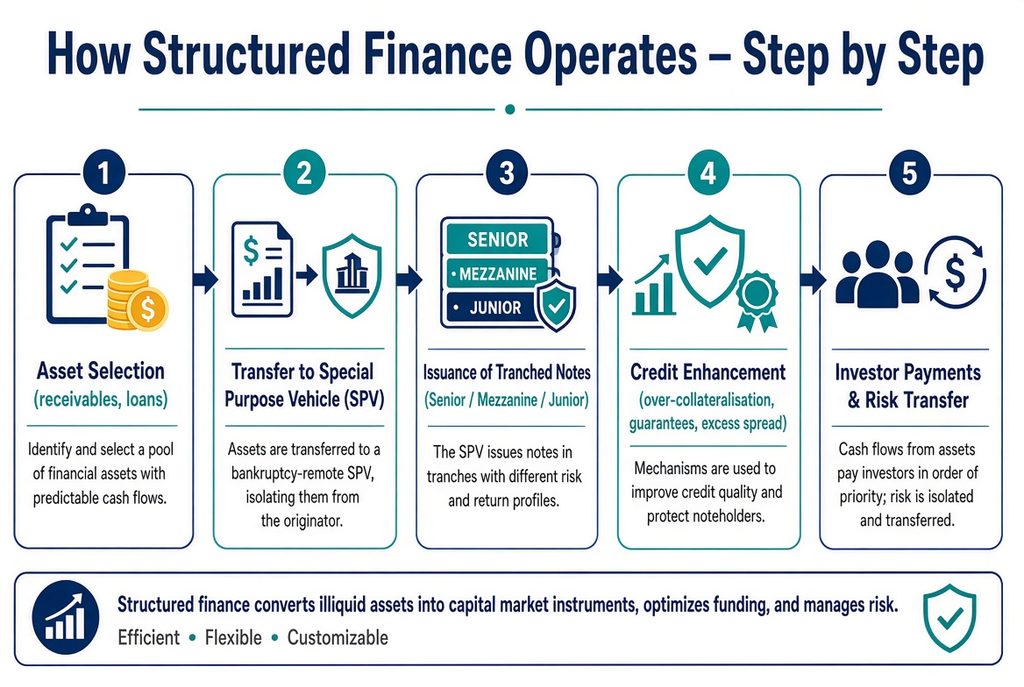
The process begins with asset selection. Originators gather receivables, loans or other cash-flow generating assets. These assets move into a special purpose vehicle. The vehicle issues notes or bonds divided by seniority. Senior tranches receive priority payments and therefore carry lower risk. Junior tranches absorb first losses and offer higher yields. Credit enhancement tools such as over-collateralisation, guarantees or excess spread further protect senior investors.
Securitisation forms the foundation. According to the detailed overview on Investopedia’s structured finance page, the technique converts illiquid assets into tradable securities. This conversion frees capital for the originator and opens investment opportunities for a wider group of buyers. Market participants use the same framework for collateralised debt obligations, collateralised loan obligations, asset-backed securities and synthetic instruments.
TRG Venture Capital International Investment G.P. Limited integrates these principles into its service range. The firm structures facilities that combine senior debt, mezzanine layers and contingent instruments such as standby letters of credit. Clients therefore obtain funding that aligns with project cash flows rather than rigid amortisation schedules.
Main Instruments in Structured Finance
Asset-backed securities represent one primary category. Cash flows from credit cards, auto loans or trade receivables support these notes. Mortgage-backed securities follow a similar path yet rely on residential or commercial property loans. Collateralised loan obligations package leveraged loans and distribute them across tranches. Synthetic structures achieve risk transfer through credit default swaps without moving the underlying assets.
Each instrument serves a distinct purpose. Corporations use them to refinance portfolios, manage concentration risk or expand lending capacity. Investors select tranches that match their risk appetite and return targets. Rating agencies assign credit ratings based on the structure’s resilience under stress scenarios. The entire process requires precise documentation, legal isolation of the special purpose vehicle and ongoing servicing of the asset pool.
TRG Venture Capital supports clients who need these instruments for large projects. The firm arranges facilities that incorporate bank guarantees and proof-of-funds instruments. Transmission occurs via SWIFT MT760 or MT799 within defined timelines. Repayment terms stretch from one to fifteen years and adjust to actual cash generation.
Benefits That Drive Adoption
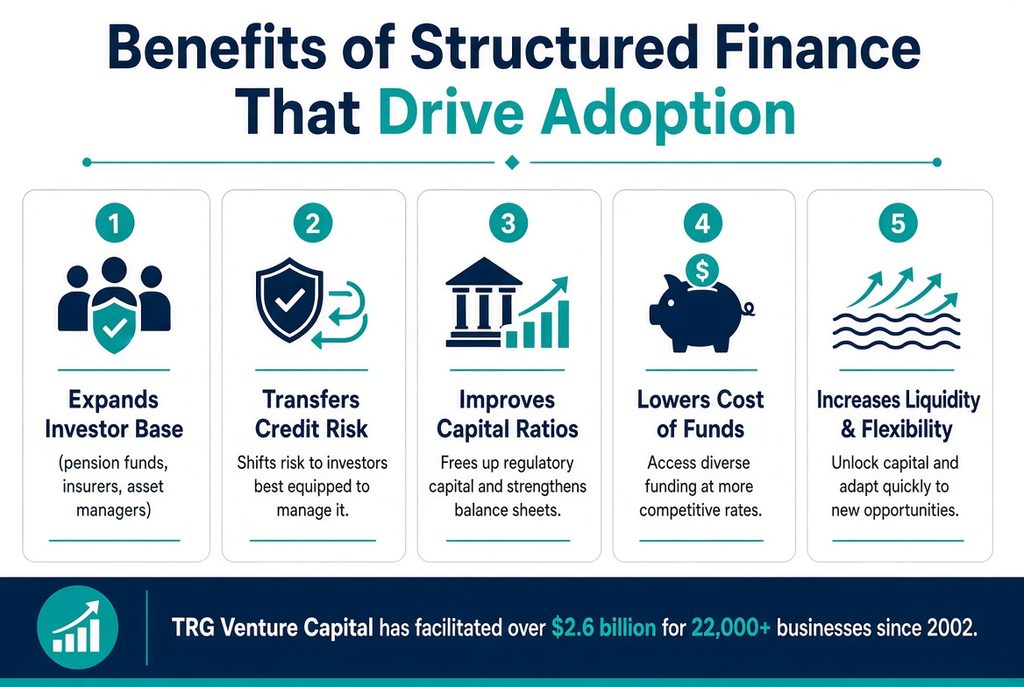
Structured finance delivers several clear advantages. First, it expands the investor base. Assets that once stayed on a single balance sheet now reach pension funds, insurance companies and asset managers. Second, it transfers credit risk away from the originator. Third, it can improve capital ratios under regulatory frameworks. Fourth, it often lowers the overall cost of funds compared with unsecured corporate borrowing.
Liquidity improves because the securities trade in secondary markets. Originators recycle capital into new lending. Borrowers gain flexibility in size and structure that conventional products cannot match. These benefits explain why structured finance has grown into a multi-trillion-dollar market segment.
TRG Venture Capital International Investment G.P. Limited focuses on practical delivery of these benefits. Clients receive dedicated account managers, encrypted application processes and rapid fund deployment. The firm has supported more than 22,000 businesses and facilitated over $2.6 billion in financing since 2002. Its Jersey base provides a stable regulatory environment while serving a global clientele.
Real-World Example of Structured Finance Application
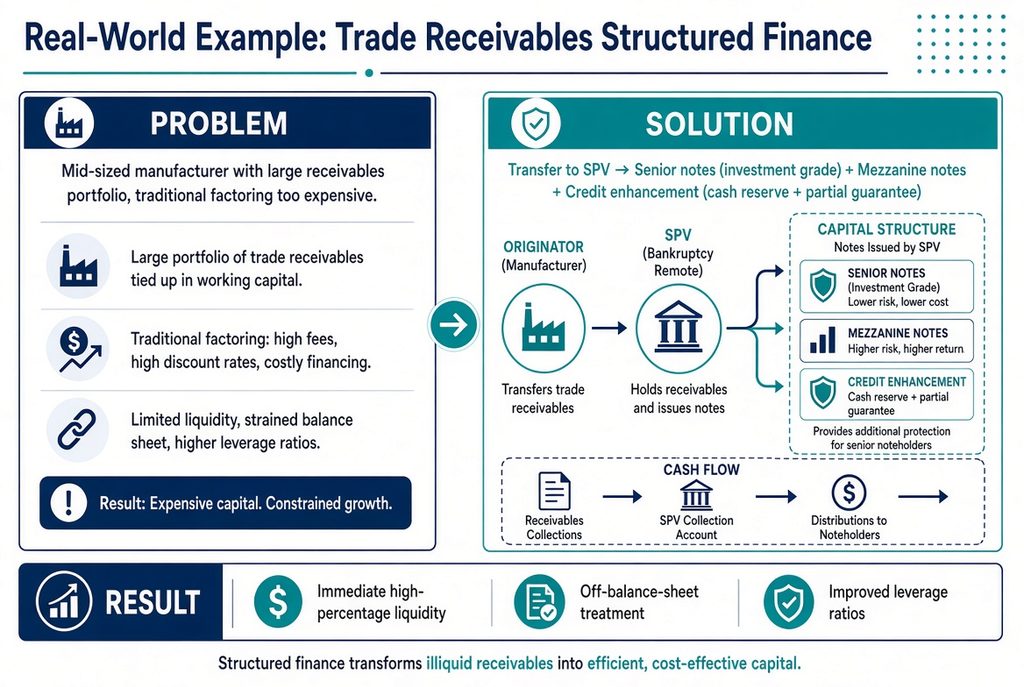
Now imagine a mid-sized manufacturing group that holds a large portfolio of trade receivables. Traditional factoring covers only a portion of the book and carries high fees. The group instead transfers the receivables into a special purpose vehicle. The vehicle issues senior notes rated investment grade and mezzanine notes for yield-seeking investors. Credit enhancement comes from a cash reserve and a partial guarantee. The manufacturer receives immediate liquidity equal to a high percentage of the receivables face value. Investors receive periodic payments linked to collection performance. The structure remains off the manufacturer’s balance sheet and improves reported leverage ratios.
This example mirrors transactions that TRG Venture Capital structures for clients in industrial and trading sectors. The firm evaluates asset quality, designs the waterfall of payments and coordinates with rating agencies and legal counsel. Execution occurs within weeks rather than months.
Case Study: Infrastructure Project Funding via Structured Layers
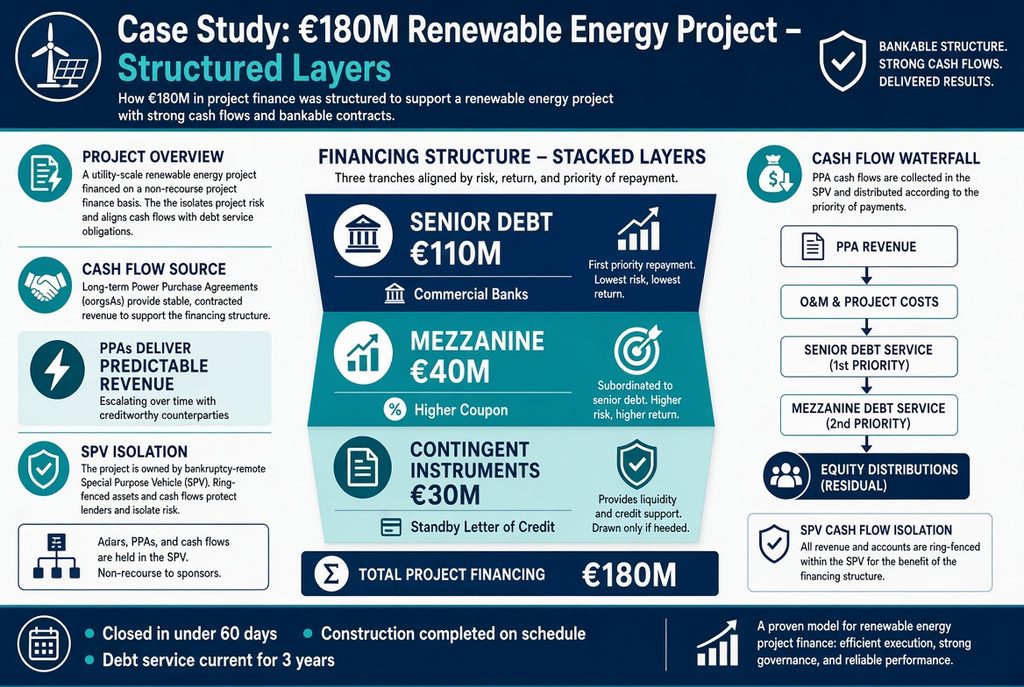
Years back a client who was a European energy developer required €180 million to complete a renewable power facility. Meanwhile bank loans alone could not cover the full amount under the required timeline and covenants. Therefore TRG Venture Capital International Investment G.P. Limited stepped in and designed a multi-layer structure. Senior debt of €110 million came from a syndicate of commercial banks. A mezzanine tranche of €40 million provided subordinated capital with a higher coupon. The remaining €30 million took the form of contingent instruments including a standby letter of credit that supported construction-period obligations.
Cash flows from power purchase agreements backed the entire stack. The special purpose vehicle isolated project risk from the sponsor’s other activities. Independent engineers verified technical assumptions. Legal counsel confirmed bankruptcy remoteness. The structure closed in under sixty days. Construction finished on schedule. Debt service began after commercial operation and has remained current for three years. The sponsor retained operational control while transferring a defined portion of construction and revenue risk to capital providers.
This case clearly demonstrates how structured finance converts project-specific cash flows into investable securities. TRG Venture Capital applied the same principles of tranching, enhancement and isolation that define the broader market.
Key Risks and Mitigation Steps
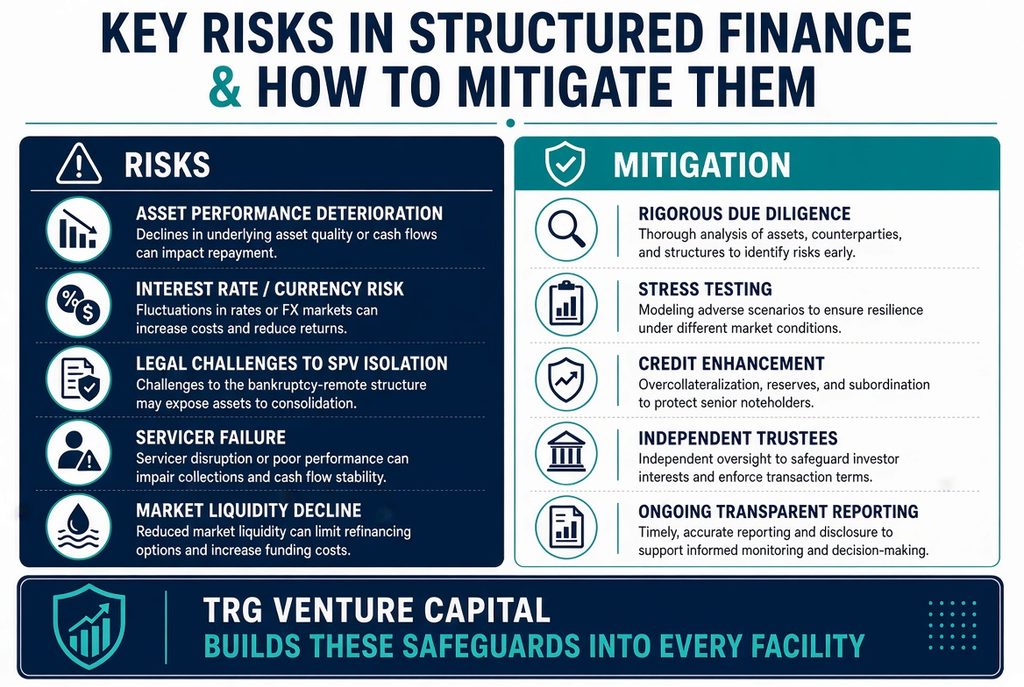
Structured finance carries distinct risks. Asset performance may deteriorate. Interest rate or currency movements can affect cash flows. Legal challenges to the special purpose vehicle’s isolation may arise. Servicer failure can disrupt collections. Market liquidity for certain tranches can decline in stress periods.
Mitigation starts with rigorous due diligence on the underlying assets. Stress testing examines performance under severe scenarios. Credit enhancement absorbs expected losses. Independent trustees oversee the payment waterfall. Ongoing reporting keeps investors informed. TRG Venture Capital builds these safeguards into every facility it arranges. Clients receive transparent documentation and regular performance updates.
Do well to read our article on SBLC Monetization Explained | TRG Venture Capital Guide
Regulatory and Market Context
Regulatory frameworks shape structured finance activity. Capital rules influence how banks hold structured exposures. Disclosure requirements demand detailed information on underlying assets. Accounting standards determine whether assets leave the originator’s balance sheet. Market infrastructure such as clearing houses and rating methodologies continues to evolve. Participants who stay current with these developments maintain access to efficient funding.
TRG Venture Capital monitors regulatory changes that affect its clients. The firm’s Jersey location offers a recognised international finance centre status while remaining aligned with global standards. This positioning supports cross-border transactions for companies operating in multiple jurisdictions.
Frequently Asked Questions
What is the primary purpose of structured finance?
Structured finance creates tailored funding solutions when conventional loans cannot meet size, risk or timing requirements. It pools assets and issues securities with defined payment priorities.
How does securitisation differ from traditional lending?
Securitisation converts asset cash flows into tradable notes. Traditional lending keeps the loan on the lender’s balance sheet and relies on the borrower’s overall credit.
Which institutions use structured finance most frequently?
Large corporations, project developers, financial institutions and infrastructure sponsors employ these techniques for complex capital needs.
What role does a special purpose vehicle play?
The vehicle holds the assets, issues the securities and isolates the transaction from the originator’s bankruptcy risk.
How can TRG Venture Capital assist with structured finance needs?
TRG Venture Capital International Investment G.P. Limited designs multi-layer facilities, arranges credit enhancement instruments and executes funding from $4 million upward with flexible terms.
Summary of Core Points
Structured finance enables institutions to address funding requirements that exceed standard product limits. The process relies on asset pooling, tranching and credit enhancement. Instruments range from asset-backed securities to collateralised loan obligations. Benefits include broader investor access, risk transfer and potential cost reduction. TRG Venture Capital International Investment G.P. Limited applies these methods to deliver practical capital solutions for businesses worldwide. Understanding the mechanics, instruments and safeguards positions decision-makers to evaluate opportunities with clarity.
#StructuredFinance #CapitalSolutions #TRGVentureCapital #ProjectFinance
Contact TRG Venture Capital International Investment G.P. Limited today to discuss how structured finance can unlock the precise capital structure your next project requires. Reach our dedicated team for a confidential consultation on facilities from $4 million to $700 million. Take the next step now and secure funding aligned with your cash flows.
Contact us @ trgventure.capital
Email: info@trgventure.capital